Guide
Check engine light on, and the car drives normally
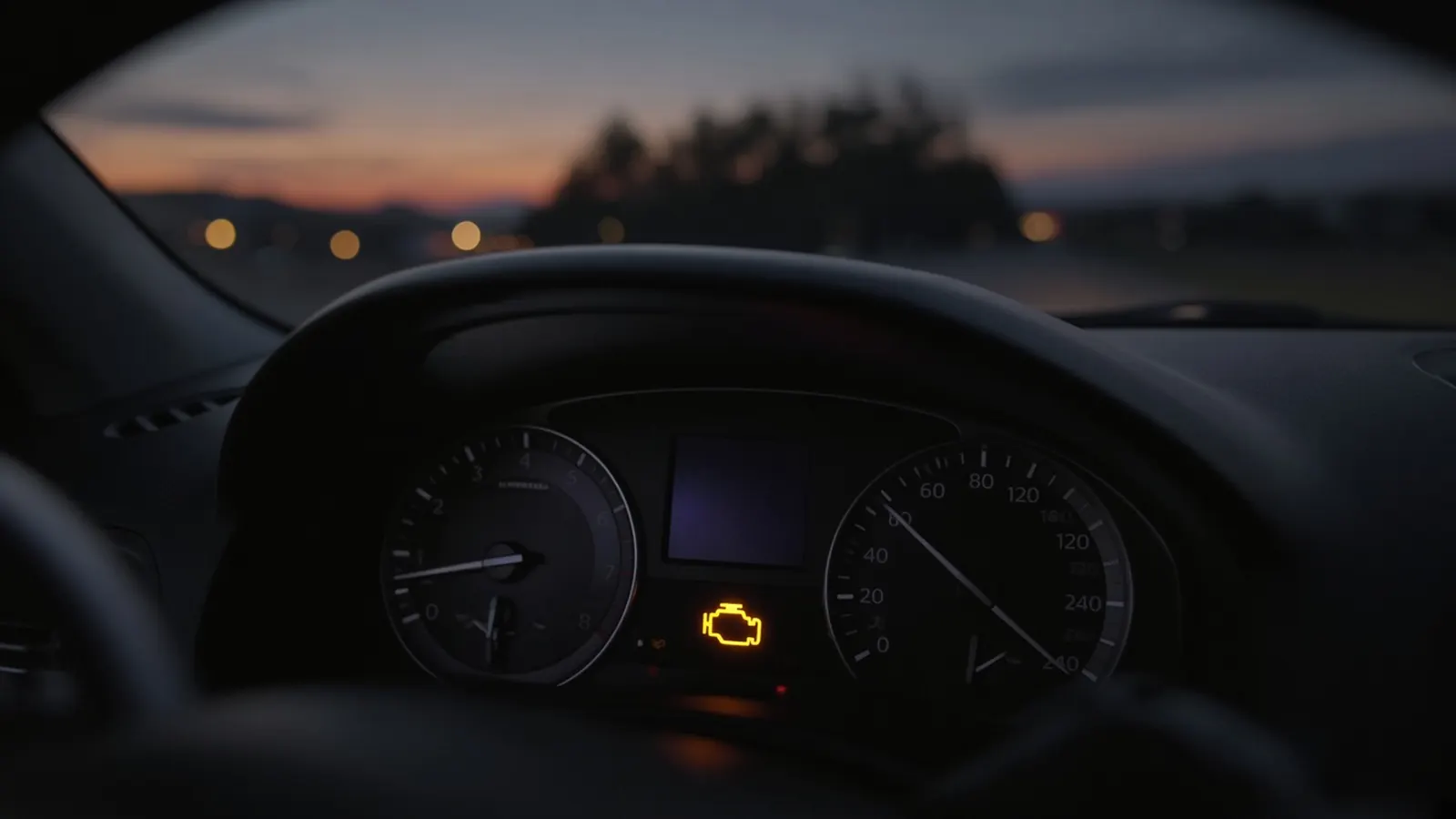
A car can drive normally with the check engine light on. Evaporative leaks, catalyst efficiency, and some sensor rationality tests do not change the way the car feels. The light is still reporting a failed monitor.
Read the code anyway. A normal drive does not tell you the code is minor, and it does not tell you an inspection will pass. The lamp being on is itself a failure in most emissions inspections.
If the light is on and you feel a misfire, a slip, or a hot smell, the normal-drive assumption is over. Use the flashing-light and transmission guidance on this site.
Clearing the light so the dash looks calm will not pass most inspections once, and it erases the freeze frame. Read first.
Check engine light on, and the car drives normally is the decision you make before opening a single code page. Once you have the code, open that page and read the fault type. An open circuit, a low reading, a leak, and an efficiency failure are not the same repair, even when they mention the same part.
Keep the driving limits narrow. A flashing light, an oil-pressure warning, an overheating engine, a slipping transmission, liquid fuel, or an orange high-voltage cable overrides the general advice that a steady lamp can be driven gently to a shop.
The service information for the exact year and engine still controls pinouts, torque, fluid type, and high-voltage isolation. This guide does not invent those values, and it does not claim a repair that was not performed on a specific car.